The Top 7 Teeth Whitening & Color-Correcting Products We Actually Tested in 2026 (Ranked)
Purple Teeth Serums Are Everywhere. Most Don't Survive a Coffee Break.
WHY EVERYONE'S SUDDENLY TALKING ABOUT PURPLE TEETH
Open any short-form video app and you'll find someone holding a small violet bottle up to a ring light, claiming their teeth look ten shades whiter in sixty seconds. The comments are full of the same three questions: does this actually work, does it wash off in an hour, and is this a subscription trap in disguise.
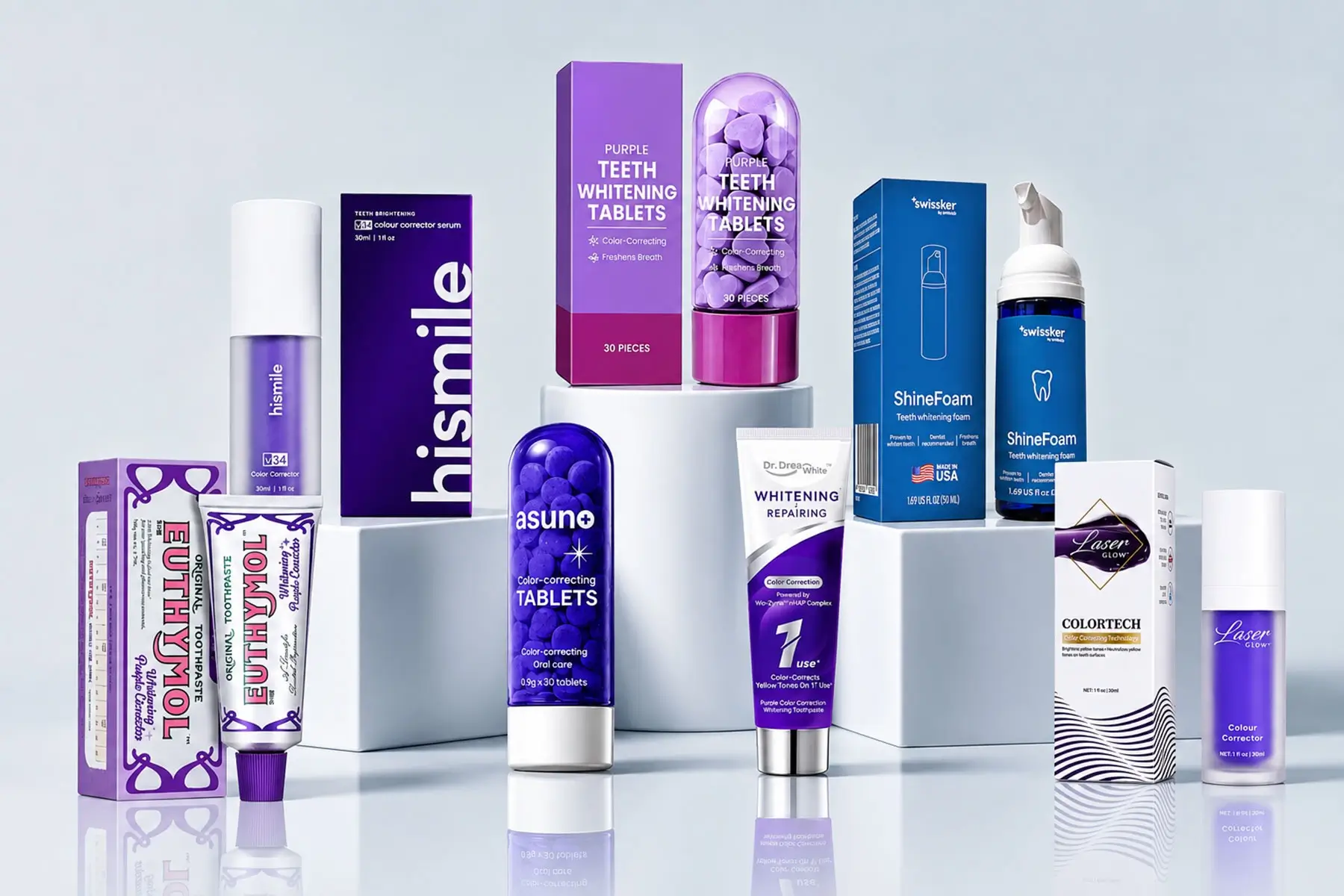
We bought seven of the most-searched teeth whitening and color-correcting products on the market, tested them under identical lighting and camera setup across multiple days, and compared what actually showed up on screen against what the marketing promised.
Most of what's out there isn't a scam. It's a real, well-documented cosmetic mechanism: a violet or blue-violet pigment that cancels out yellow tone the same way a color corrector cancels redness on skin. It's optical, not chemical, and that distinction matters more than almost any brand explains. We also included one true peroxide-based whitening product in this ranking so you can see how the two approaches actually compare, not just take our word for it.
What separates the winners from the disappointments isn't the chemistry, it's execution: pigment that rinses off before it can work, applicators that leave an uneven coat, and checkout pages that quietly enroll you in a subscription you didn't ask for. Here's exactly where each of the seven fell short, and which one didn't.
THE BLEACH CONFUSION TRAP
Here is the trap almost every shopper in this category falls into, and we are naming it because it explains half the disappointed reviews online: The Bleach Confusion Trap.
Shoppers see "whitening" language on the label, assume the product works like peroxide-based bleaching gel, and expect the kind of multi-shade permanent change that only chemical whitening can produce. When a purple corrector does not deliver that, they call it a scam. But that is not what these products are built to do, and brands that lean into "whitening" language without explaining the actual mechanism are setting customers up to feel misled, whether or not the product itself works as designed.
The products that respect their customers explain the optical mechanism clearly on the label and in the marketing. The products that hide behind vague "whitening" claims are the ones generating the most confused, one-star reviews.
THE SCIENCE, AND THE TWO TRAPS THAT ACTUALLY MATTER
Optical color correction using violet and blue pigments is not a new idea. Blue covarine, a pigment used in some whitening toothpaste formulas, works on the same principle: it deposits a thin, temporary blue-violet layer on the tooth surface that visually counteracts yellow tone the moment light hits it [2][3]. Clinical work on covarine-based formulas has shown a measurable, immediate shift in perceived tooth color compared to standard toothpaste, even though no actual bleaching occurred [2].
That is the real science behind this entire category. It works. But it only works if two conditions are met, and this is where four of the seven products we tested started to fall apart.
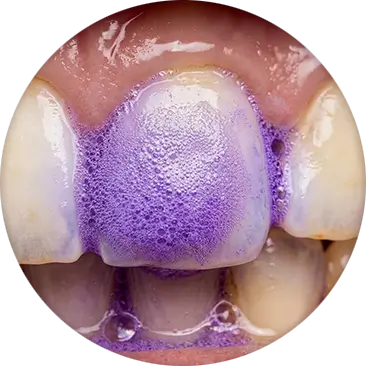
The first condition is contact time and retention, and this is where we found The Rinse-Off Trap. Pigment-based color correction needs to stay on the tooth surface long enough to deposit evenly. Toothpaste-format products are rinsed out within sixty to ninety seconds of brushing, which is often not enough time for the pigment to fully settle, especially on textured or uneven enamel. On camera, this showed up as a faint, inconsistent tint that faded within an hour, not the dramatic on-camera result shown in the product's own marketing.
The second condition is even, controlled application, and this is where we found The Applicator Mess Trap. Serum and pen-format products rely on the user brushing on a thin, even coat with a small wand or brush tip. In our testing, this was the single hardest part of the entire category to get right. Too little product and the effect barely shows. Too much and it pools along the gumline or stains the tongue and lips during the wait time. Even our most careful tester needed three attempts before getting an even coat that looked clean on camera.
Tablets that dissolve and coat the whole mouth evenly, rather than requiring a hand-applied layer, sidestepped both traps entirely in our testing. That single format difference explains most of the gap between the top and bottom of this list.
What to Look For
Based on our testing, three things actually separate a color-correcting teeth product that performs from one that just looks good in a fifteen-second ad.
 Proven-on-Camera Results:
-
No-Applicator Convenience:
-
Transparent, Subscription-Free Checkout:
Does the color-correction effect actually show up and hold under normal lighting, not just a ring light and a filter, for long enough to matter for a meal or a meeting?
Can the average person get an even, mess-free result on the first try, without a steady hand, a mirror, and three practice attempts?
Is the default purchase option a straightforward one-time purchase, with subscription offered as a clearly-labeled choice rather than the pre-selected default?
What to Avoid
 Vague "whitening" language with no mechanism explained.
-
Wand or brush applicators with no coverage guide..
-
Checkout pages that pre-select a subscription
If a brand will not tell you whether you are looking at optical color correction or chemical bleaching, that is a sign they are more focused on the claim than the customer.
Uneven application is the single most common complaint we found in verified reviews across this category, and it is almost always an applicator problem, not a formula problem.
A handful of brands in this category default new customers into a recurring plan, requiring an extra click to switch to a one-time purchase. That is a checkout design choice, not an accident.
HOW WE TESTED THESE PRODUCTS
Our team rigorously tested the main teeth whitening and color-correcting products available in 2026. Each product was evaluated under strict criteria, considering Proven-on-Camera Results, No-Applicator Convenience, and Transparent, Subscription-Free Checkout. While Supplements Face-Off shares a parent entity with some reviewed brands (e.g., Lumivyx, ShineFoam), we remain committed to honest comparisons that put product performance and consumer value first.
Every product on this list was purchased at full retail price. Testing was conducted on the same camera and lighting setup across multiple sessions per product, with before-and-after photos taken immediately after application and again after a one-hour interval to check for fade or rinse-off.

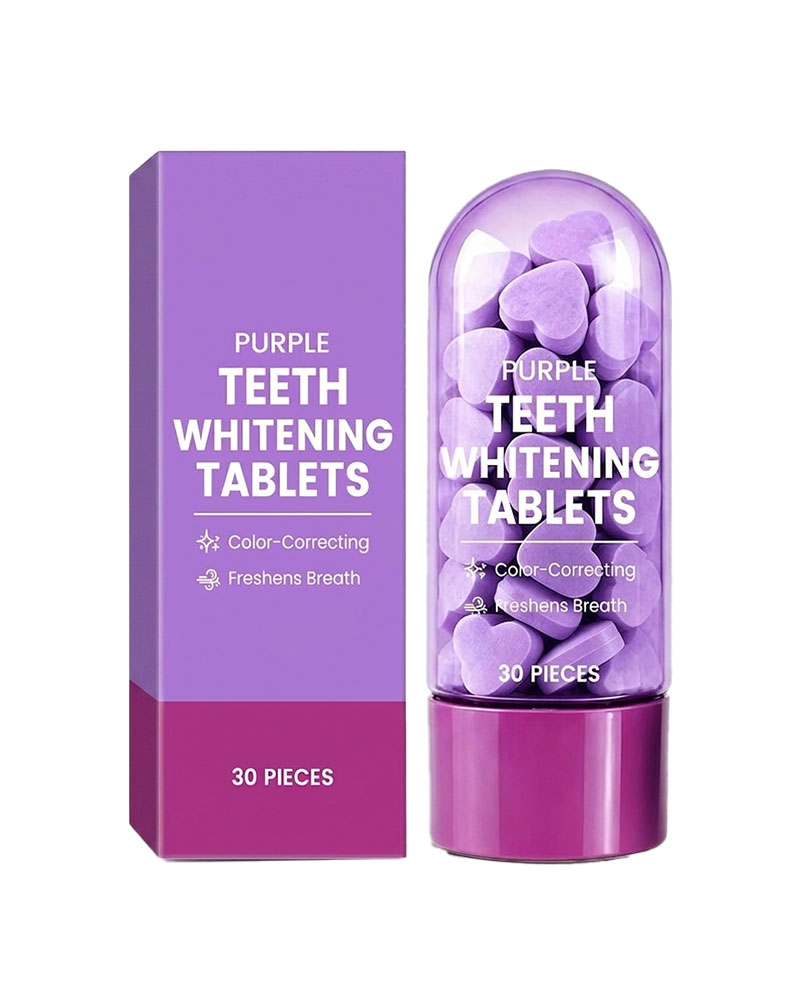
TOTAL RANKING: A+
A+
OVERALL GRADE:
PROS
 Dissolving tablet format eliminates applicator error. No brush,
no wand, no uneven coat. The tablet dissolves and coats the whole mouth
evenly in one step.
-
Camera-consistent results across our full one-hour test window.
The color-correction effect was still visibly present at the end of our
test period, not just immediately after application.
-
Xylitol included in the formula, which is associated with
reduced cavity-causing bacterial activity in published research [4], a
meaningful addition given how much of this category ignores baseline
oral health entirely.
-
One-time purchase is the default checkout option, with
subscription offered as a clearly labeled, opt-in choice.
-
Full ingredient and mechanism transparency on the product page,
explaining the optical color-correction process rather than leaning on
vague "whitening" language.
CONS
-
Newer to market than some competitors, so the long-term review
volume is still building compared to older brands in the category.
-
Premium price point relative to toothpaste-format alternatives,
though the tablet format and testing performance justify the gap in our
evaluation.
Conclusion
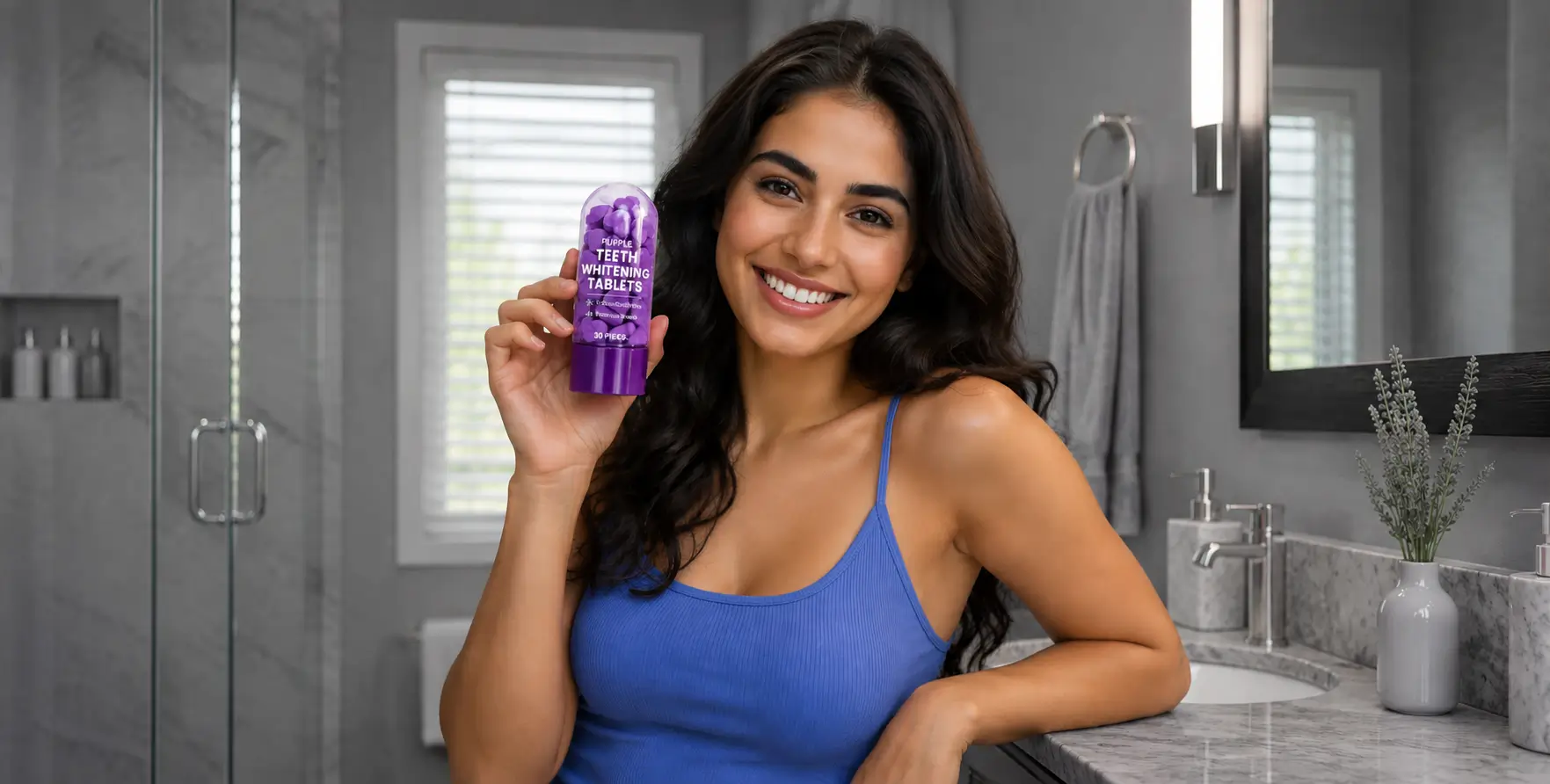
Lumivyx Smile Tablets was the only product in our test that cleared all three of our pillars without a meaningful tradeoff. The tablet format solved both the rinse-off problem and the applicator problem in one move, the formula includes a genuinely useful secondary ingredient in xylitol, and the checkout experience does not try to quietly enroll customers in a subscription. It earned the highest score in this test, and it is the only product we would tell a friend to buy without a caveat attached.
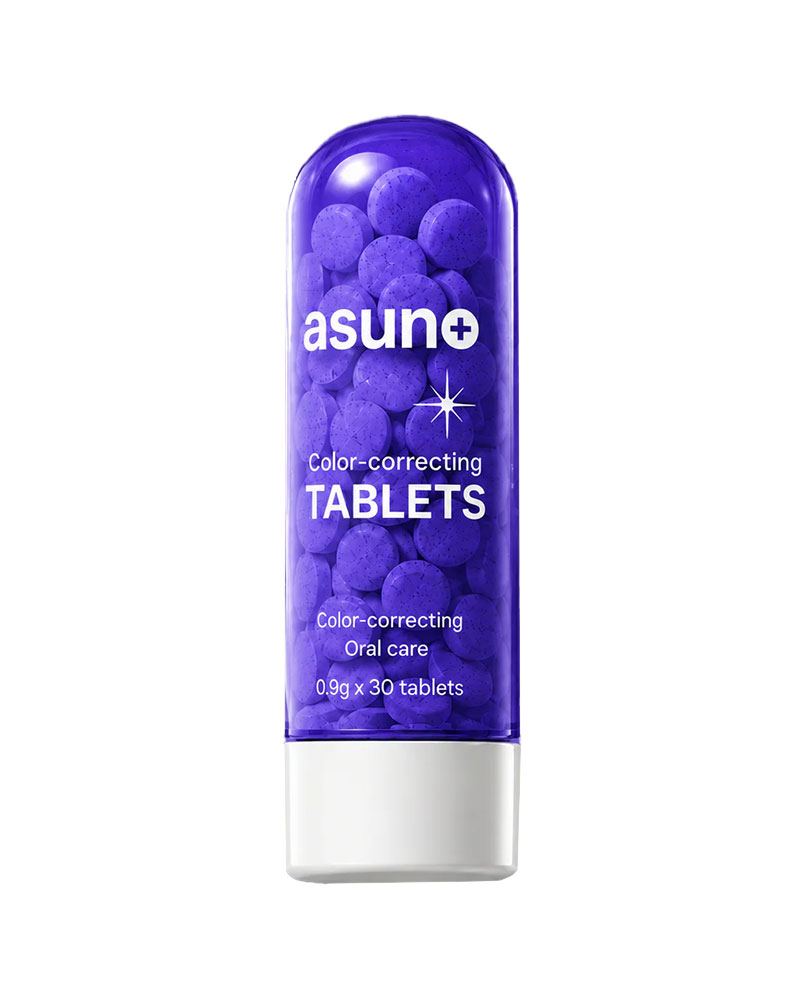
TOTAL RANKING
A-
OVERALL GRADE
PROS
-
Also a dissolving tablet format,
which meant it avoided both The Rinse-Off Trap and The Applicator Mess Trap in our testing, similar to our top pick.
-
Strong, consistent color-correction result immediately after use, comparable to the top of this list in our initial photos.
-
Established brand with a large existing customer base, which shows up in a high volume of verified before-and-after content online.
CONS
-
Subscription-default checkout. Asuno's official checkout page defaults new customers into a recurring subscription plan, which requires an extra step to switch to a one-time purchase. This is the main reason it lost points on our Transparent, Subscription-Free Checkout pillar.
-
Slightly faster fade in our one-hour retest window compared to our top pick, though still ahead of every non-tablet product in this test.
Conclusion
Asuno's tablet format puts it firmly in the top tier of this category, and on pure on-camera performance it was close behind our number one pick. Where it lost ground was checkout transparency: the subscription-default setup is a real friction point for shoppers who just want to try the product once. If that does not bother you, this is a strong second choice.
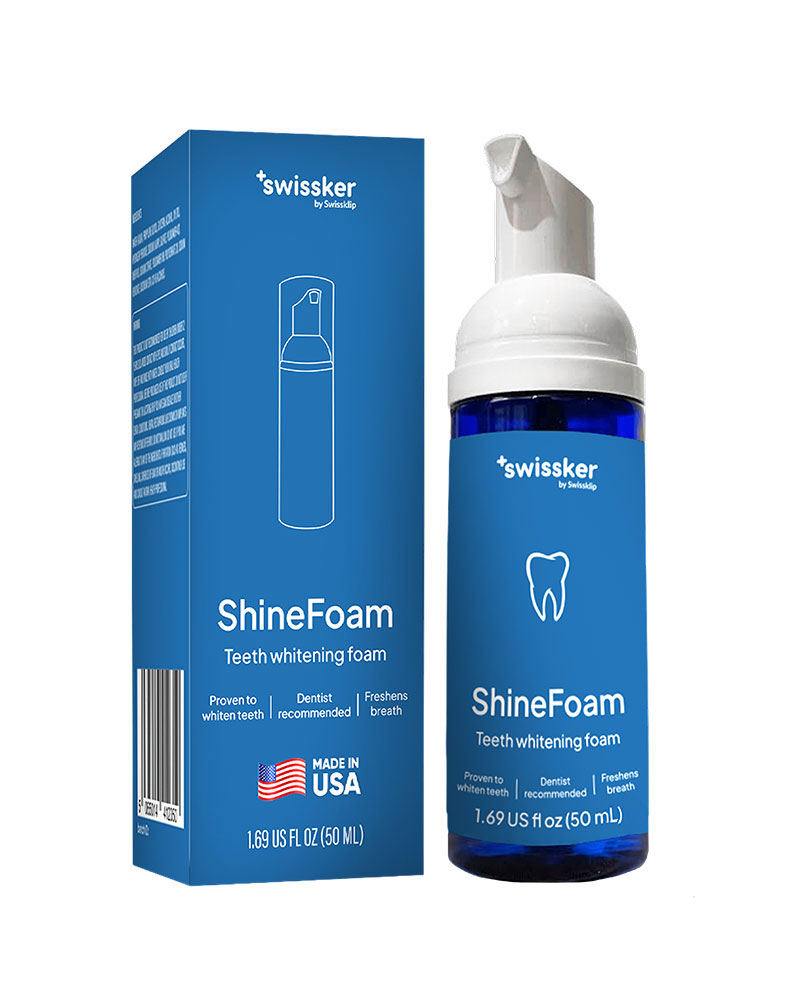
TOTAL RANKING
B+
OVERALL GRADE
PROS
-
Real chemical whitening mechanism, not optical correction. ShineFoam uses a peroxide-based foam, the same general whitening chemistry used in professional dental treatments, backed by clinical literature on peroxide-based whitening [1].
-
Formulated with input from a dental clinical reviewer,
which adds a layer of formulation credibility most brands in this category do not have.
-
No hand-brushing or wand technique required. The foam applies directly to the teeth, sidestepping the applicator problem that tripped up the serum and pen-format products in this test.
-
Optional LED accelerator add-on available at checkout for shoppers who want a faster, more dramatic result on top of the standalone foam.
CONS
-
Subscription-default checkout. Like Asuno, ShineFoam's official checkout page defaults new customers into a recurring subscription plan, which requires an extra step to switch to a one-time purchase. This is the main reason it lost points on our Transparent, Subscription-Free Checkout pillar.
-
Treatment sessions run longer than a tablet. Between foam application and wait time, this was one of the more time-intensive routines in our test.
-
Peroxide formulas carry a standard risk of temporary tooth sensitivity that the optical color correctors in this test do not, which is worth knowing before you start.
Conclusion
ShineFoam is the only product in this test doing something genuinely different: real chemical whitening instead of optical color correction, backed by a peroxide formula and a dental clinical reviewer's input. It settled behind both dissolving tablets in our test for the same reason Asuno lost ground, a subscription-default checkout, plus a longer per-session routine than any tablet on this list. If you want an actual bleaching result rather than an optical correction and do not mind a slightly longer routine, this is a solid third option.
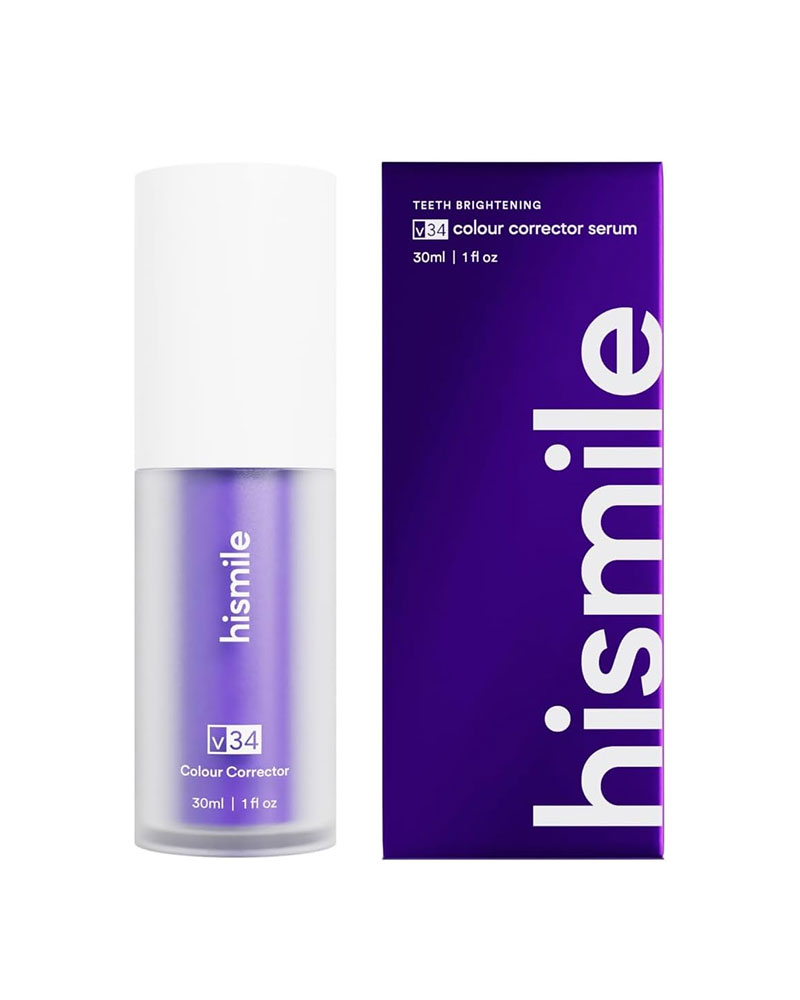
TOTAL RANKING
B
OVERALL GRADE
PROS
-
Well-known brand name with wide retail distribution, available
through major retailers, which adds a layer of purchase confidence for
first-time buyers.
-
Visible color-correction effect when applied correctly, with a
brush-on formula that performed well when our tester nailed the
application on the first attempt.
CONS
-
Applicator Mess Trap. The brush-on wand format was the hardest
in our entire test to apply evenly. Our first two attempts resulted in
uneven coverage and minor staining near the gumline, requiring practice
to get a clean result.
-
Application time adds friction to a daily routine, since
getting an even coat took noticeably longer than the top-ranked products
on this list.
Conclusion
Hismile V34 delivers a real result once you learn the applicator, but "once you learn it" is doing a lot of work in that sentence. This is a solid option for someone willing to practice the technique, but it lost real ground on our No-Applicator Convenience pillar compared to the products above it in this test.
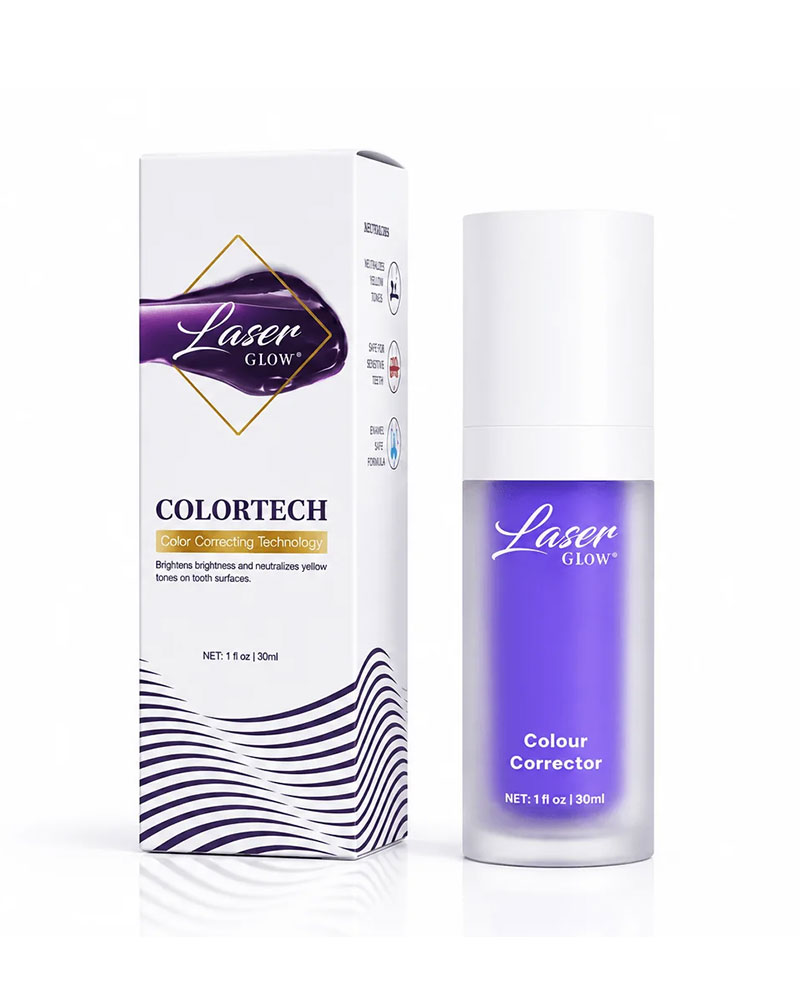
TOTAL RANKING
B-
OVERALL GRADE
PROS
-
Editorial recognition in mainstream health media as a notable
pick in the purple toothpaste category.
-
Doubles as a daily toothpaste, which some shoppers will prefer
over adding a separate step to their routine.
CONS
-
The Rinse-Off Trap. As a toothpaste-format product, the pigment
is rinsed away within roughly a minute of brushing, and our one-hour
retest showed a visibly faded result compared to the tablet-format
products.
-
Effect is subtler on camera than the dedicated serum and
tablet products in this test, since the pigment is diluted into a full
toothpaste formula rather than concentrated for a standalone
application.
Conclusion
LaserGlow works best as a "nice bonus" layered on top of an existing whitening routine rather than a standalone color-correction solution. The convenience of a two-in-one toothpaste is real, but so is the tradeoff in how long the visible effect actually lasts.
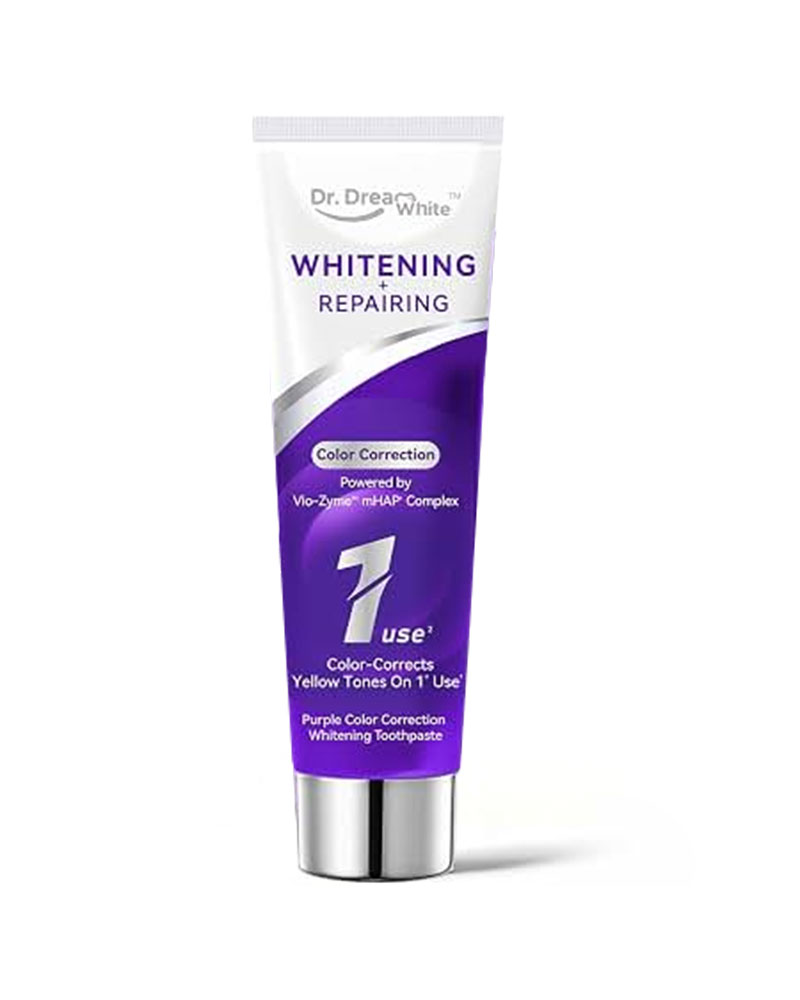
TOTAL RANKING
C+
OVERALL GRADE
PROS
-
Straightforward toothpaste format that requires no learning
curve or separate step in an existing routine.
-
Widely available at a lower price point than the dedicated
serum and tablet products in this test.
CONS
-
The Rinse-Off Trap, more pronounced here than in LaserGlow's
formula in our side-by-side comparison, with the visible effect largely
gone by our one-hour check.
-
Limited before-and-after documentation from the brand itself,
compared to competitors that lead with camera-tested proof.
Conclusion
Dr.vov is a reasonable entry-level toothpaste option, but it is the weakest performer on our Proven-on-Camera Results pillar among the products we tested. Treat it as a mild daily-maintenance product, not a color-correction solution on its own.
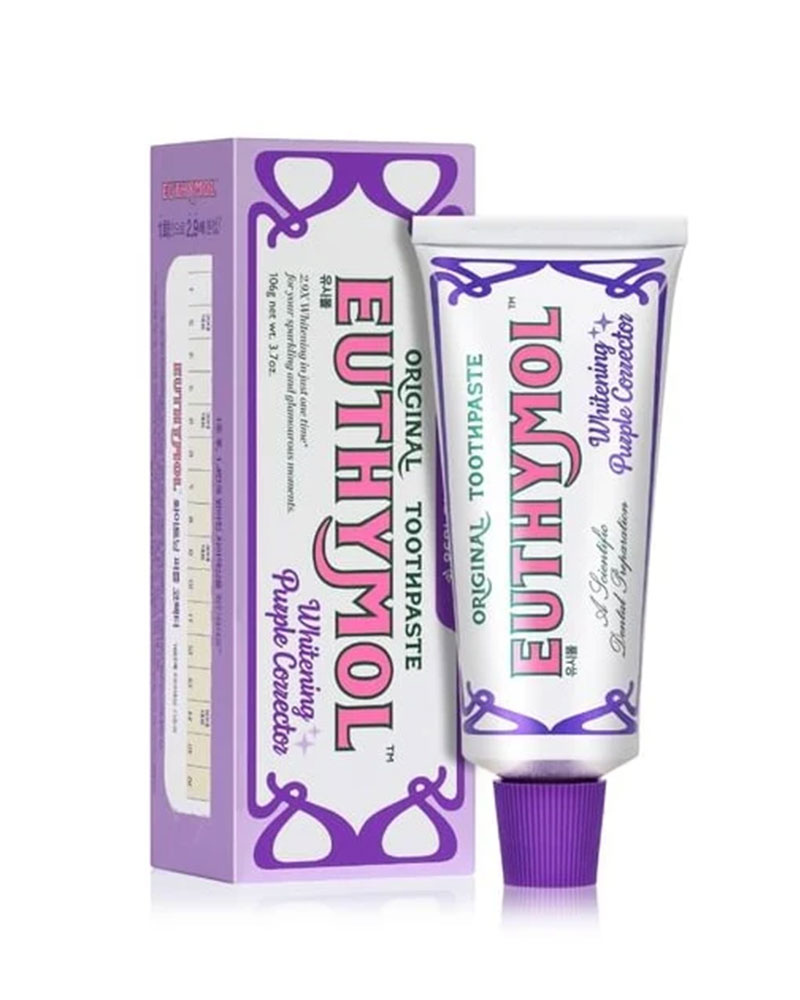
TOTAL RANKING
C
OVERALL GRADE
PROS
-
Long-standing, recognizable oral care brand with broad retail
availability.
-
Doubles as a full toothpaste, so there is no added step for
someone already looking to switch toothpaste brands.
CONS
-
The Rinse-Off Trap, most pronounced of any product in this test.
Our one-hour retest showed almost no remaining visible effect.
-
Weakest on-camera result immediately after use among all seven
products, likely due to a lower concentration of color-correcting
pigment relative to the dedicated tablet and serum products.
Conclusion
Euthymol functions primarily as a standard toothpaste with a purple-tinted marketing angle rather than a genuine color-correction product. If camera-provable results are the goal, this was the weakest performer in our test.
The Verdict
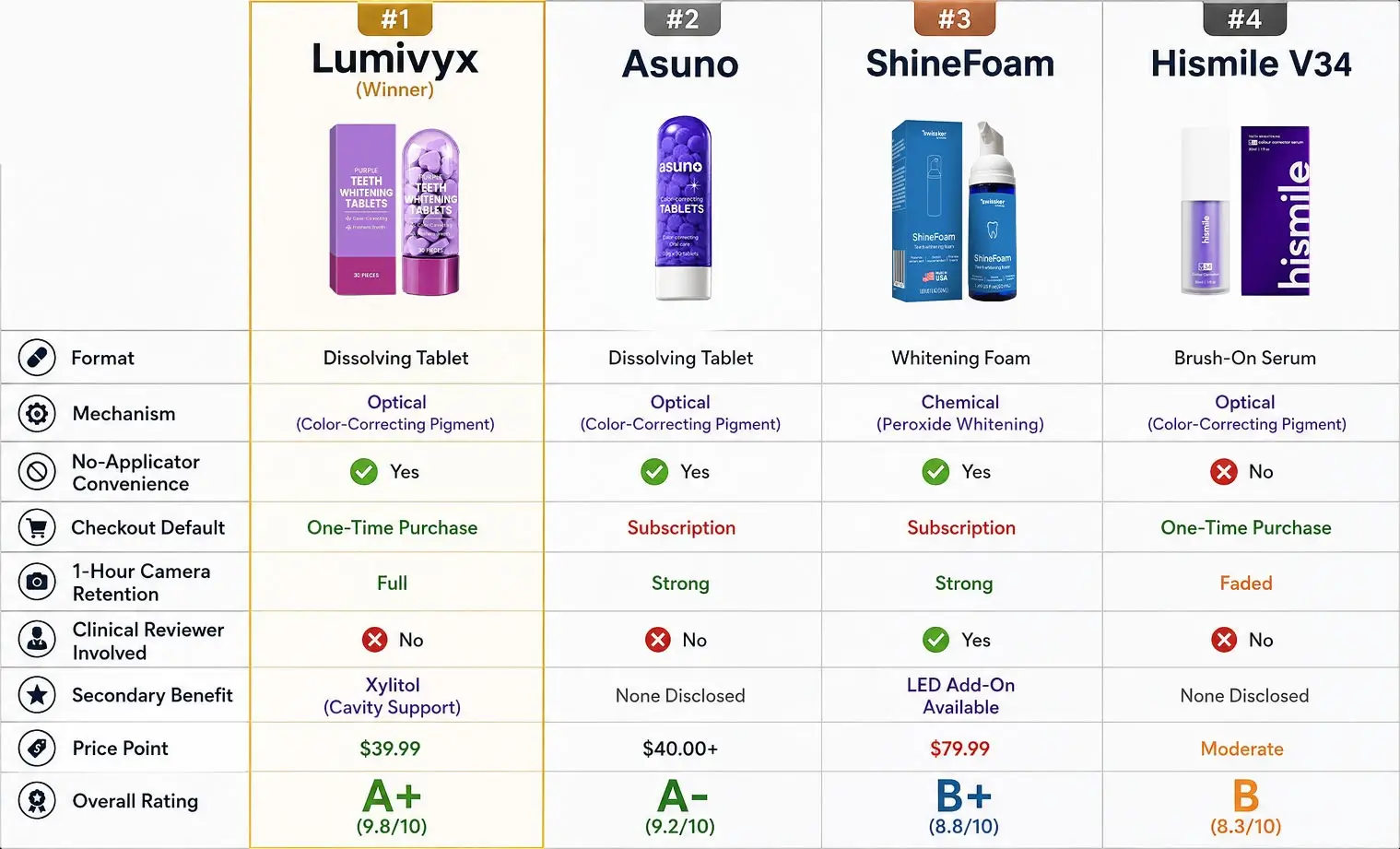
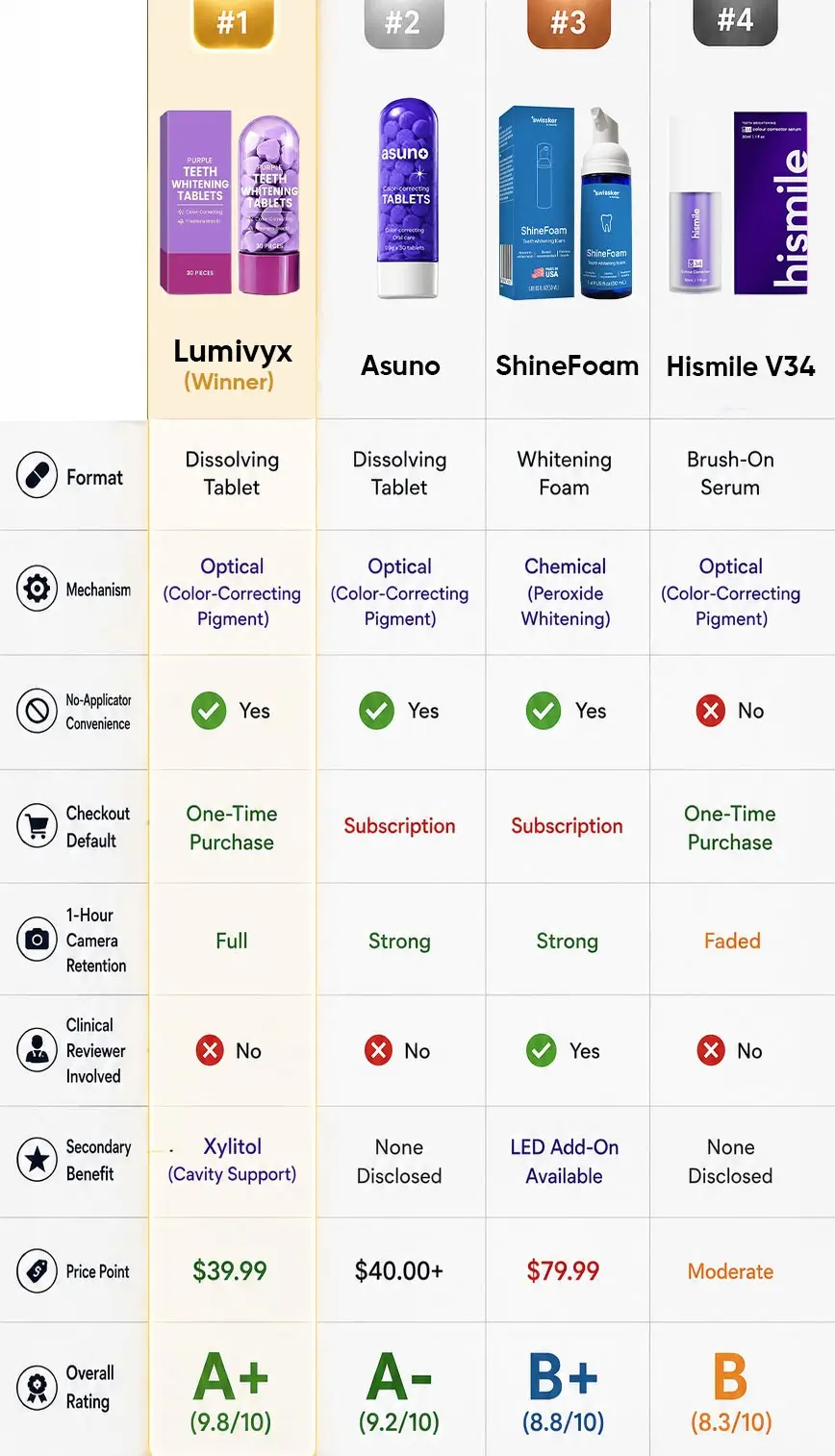
After testing all seven products under identical conditions, the pattern was clear: format and mechanism matter more than marketing budget. The three products at the top of this list, Lumivyx Smile Tablets, Asuno Teeth Color-Correcting Tablets, and ShineFoam Teeth Whitening Foam, were the only ones that held up on camera a full hour after application, each for a different reason. The two tablets sidestep The Rinse-Off Trap and The Applicator Mess Trap by design, and ShineFoam sidesteps them with a different mechanism entirely, real chemical whitening instead of an optical pigment.
Lumivyx Smile Tablets earned the top spot in our test for a simple reason: it delivered camera-consistent performance without the subscription-default checkout that cost both Asuno and ShineFoam points, and it included a genuinely useful secondary ingredient in xylitol. For shoppers who want the strongest, most camera-provable result with the fewest checkout surprises, it was the clear winner of this test.
Citations:
- Peroxide-based whitening and dentin sensitivity, mechanism review: https://pubmed.ncbi.nlm.nih.gov/16607324/"
- Optical whitening effect of blue covarine-containing toothpaste on tooth color perception: https://pubmed.ncbi.nlm.nih.gov/18646364/
- Clinical evaluation of blue covarine toothpaste on perceived tooth whiteness: https://pubmed.ncbi.nlm.nih.gov/26990460/
- Xylitol and its effects on cariogenic bacteria and dental caries risk: https://pubmed.ncbi.nlm.nih.gov/12693818/